

5 Bucket List Destinations To Visit In Europe’s Trendiest Mediterranean Country
A small Balkan nation slightly smaller than the U.S. state of Connecticut, with a coastline running along the turquoise Mediterranean for 183 miles, Montenegro is one of the trendiest places to be in Europe right now.
Though it’s home to only 620,000 residents, it is rapidly rising in popularity as a summer destination, challenging well-established regional hubs like Croatia and Greece.
In recent years, it’s attracted an average of 2.5 million visitors a year, an impressive figure considering both the size of the country—it’s Europe’s 8th-smallest nation—and the fact it’s mostly serviced by two small airports that are effectively in operation during the summer months.
From a supposed backwater of Europe to a highly sought-after Adriatic bolthole, Montenegro is undergoing a Tourism Renaissance like no other, but as a visitor who doesn’t know an awful lot about the country and isn’t quite sure where to go, what do you even plug into Google Maps?
Here are 5 bucket list spots to check out in Montenegro this spring and summer that you’ll still be bragging about months later:
Kotor

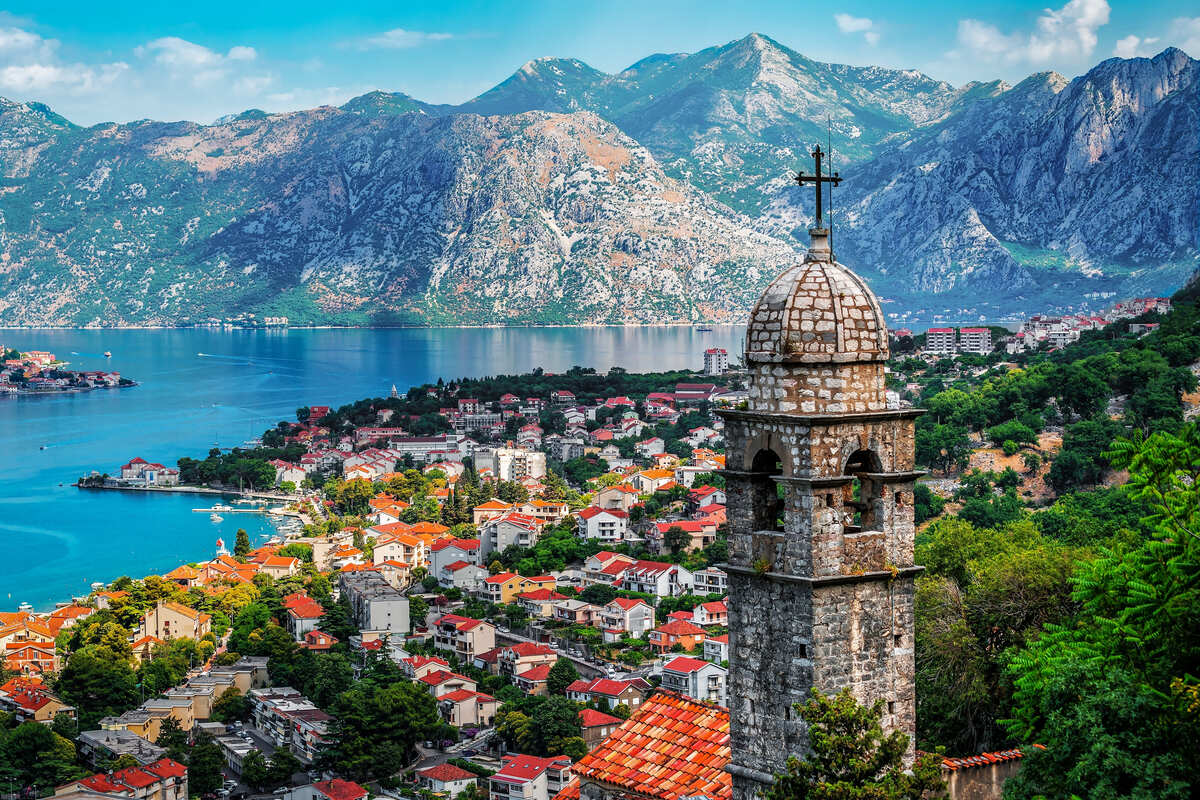
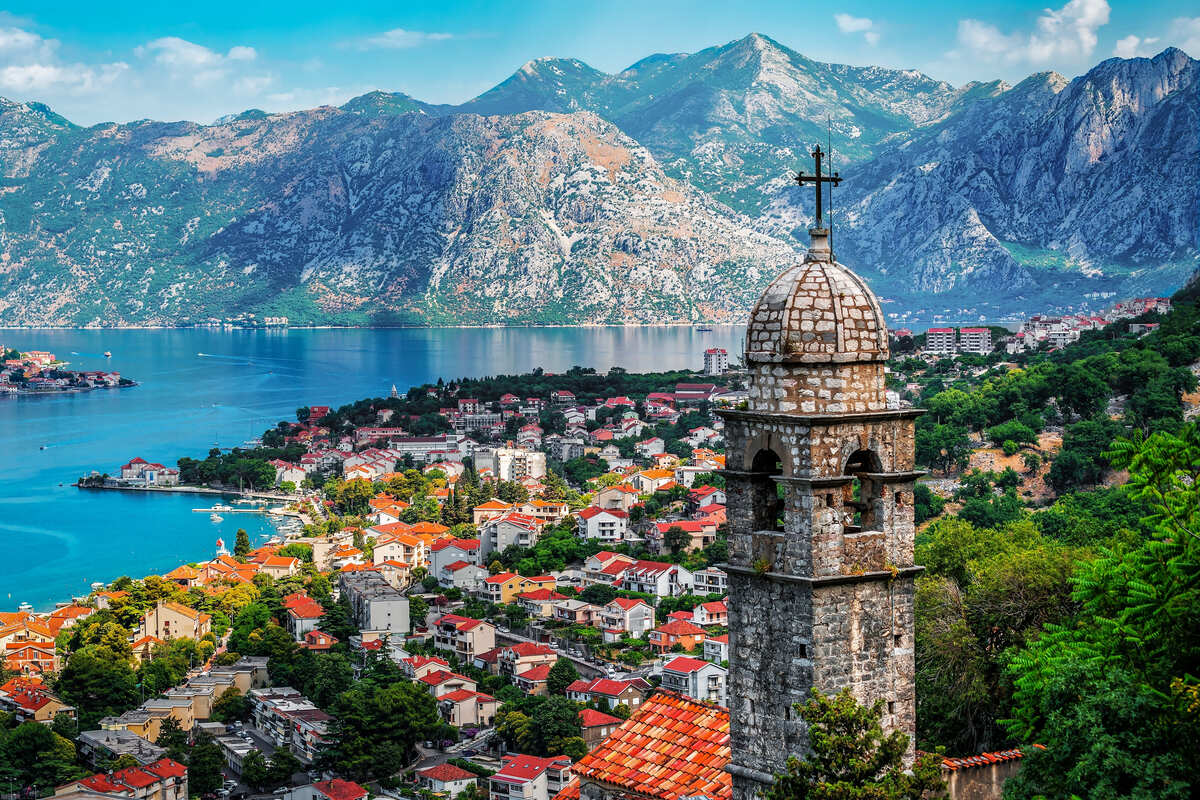
Montenegro’s most iconic seaside destination, Kotor is a UNESCO World Heritage town located in the innermost reaches of a winding bay, backed by cliffs on both sides, and fed directly by the crystalline waters of the Adriatic Sea.
Heavily fortified by walls, drawbridges, watchtowers and the like, and criss-crossed by cobbled lanes that look like they’ve been plucked straight out of a medieval-themed fantasy RPG, it’s one of Europe’s most picturesque ancient towns.

Some even go as far as calling it the “mini Dubrovnik”, and the similarities are indeed there: the signature Dalmatian ochre-coloured buildings with Italianate green shutters, picture-perfect fountain squares dominated by Romanesque churches, and narrow alleys, but in our book, Kotor is even prettier.
Oh, and considerably less crowded, if we may add.
For the best views over Kotor’s stone-made townscape and the Bay of Kotor, climb up to St. John’s Fortress, an ancient stronghold perched on a hill overlooking the whole bay.
Perast

A short drive from Kotor itself, still in the same bay, Perast is that quaint fishing village revolving around a medieval belfry. It’s tiny, but it punches way above its weight, and it’s definitely not somewhere you want to skip when traveling around Montenegro.
Kotor may look offbeat and quiet compared to Dubrovnik, over in Croatia, but it still gets ridiculously busy during cruising season. In Perast, there’s no cruise ship swarm: just one main waterfront road, stone townhouses, and a handful of chill seafood eateries.

For a town this small, with a population of only 250 people, it has quite the collection of Venetian structures: over 16 Baroque palaces, to be more precise, and between the sun-bleached stone façades and the glistening water, it’s almost like a miniature version of Venice… minus the chaos.
The absolute must-see here, however, is Our Lady of the Rocks, a man-made island home to a solitary Baroque church with a lavish interior. The boat taxi takes only 5 minutes, and costs around $10 roundtrip per person.
Cetinje
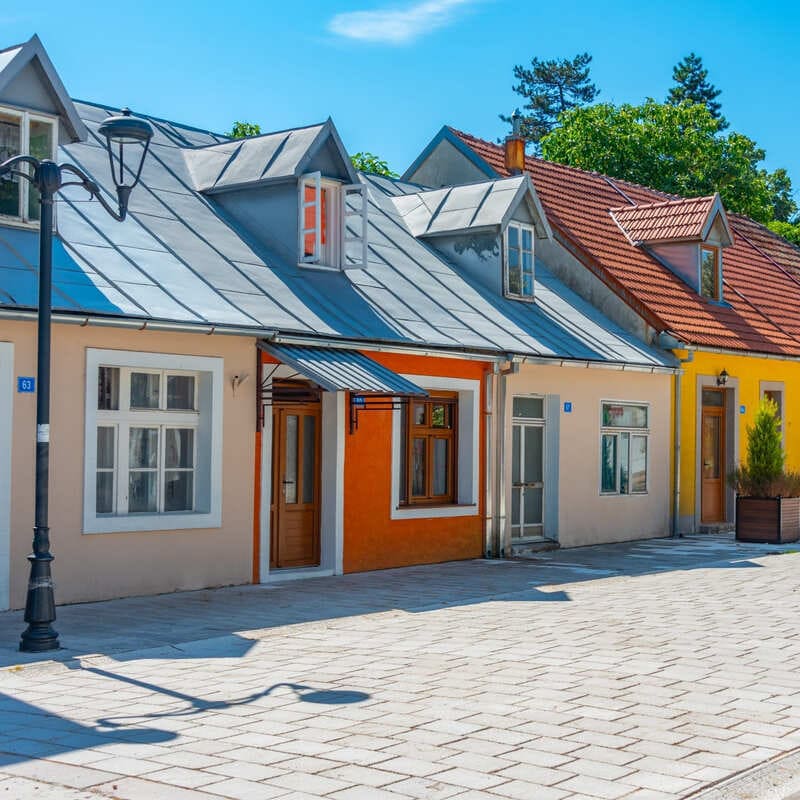
We’re leaving the coast for now and driving further inland towards Cetinje, Montenegro’s prettiest mountain village and its former royal capital.
Now, Podgorica holds the title of the country’s administrative centre and most important city, but unless you have a penchant for Brutalist architecture, snarled traffic, and graffiti-covered concrete blocks, you might find the Montenegrin capital a tad… uninspiring.
Cetinje, on the other hand, has a largely pedestrianised centre, with lamp-lit streets lined with colourful historic houses, grand palaces, and museums.
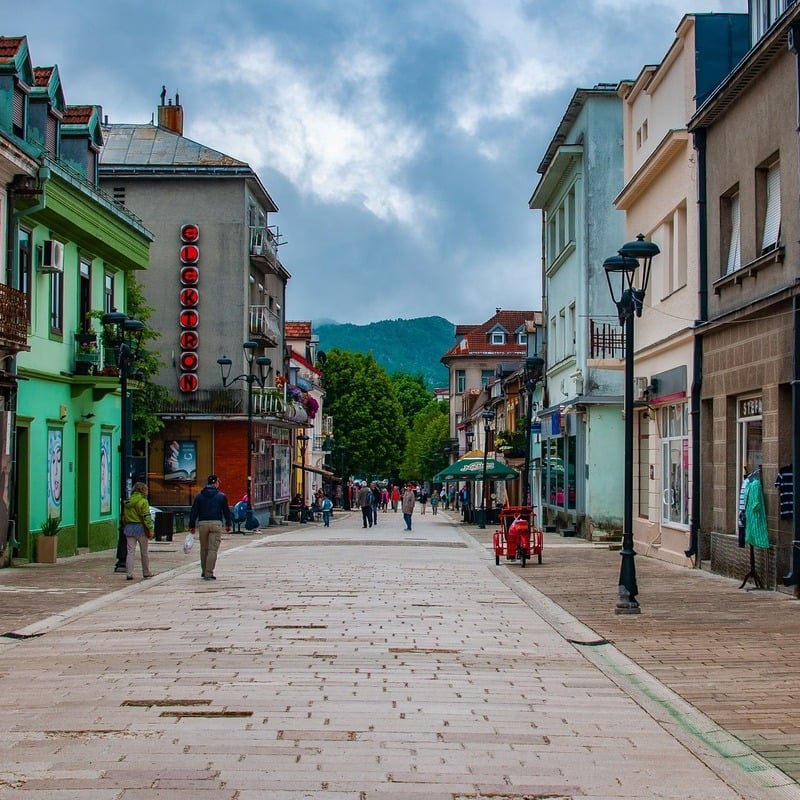
In the background, dark-green mountains that quite literally give the country its own name: Monte Negro. Black Mountain, and if you’re staying for the long weekend, you’ll be spoiled for choice as far as hiking trails go.
Must-sees include Cetinje Monastery, an Orthodox monastery housing old icons and Montenegrin relics, Ćipur, or Court Church, where members of the Petrović dynasty, which used to rule the country, are interred, and the Blue Palace, the former presidential residence.
Budva

Gorgeous as the mountain-traversed hinterland may be, Montenegro’s Mediterranean charm lies in its Adriatic Coast, shaped by over two thousand years of Greek colonization, Roman rule, Venetian trade, and later on, Yugoslav socialism.
Everyone’s flocking to Kotor, it seems, and we don’t blame them, but if there’s one town that captures the spirit of Montenegro and doesn’t feel overrun with tourists, that’s the unassuming Budva, a walled harbor town directly hugged by the Adriatic.

Occupying a historic peninsula, lapped by the gentle waves on both sides, it is essentially made up of cobble-paved lanes, Romanesque church towers, plazas bordered by no-frills cafés, and a Venetian citadel. The most fascinating part?
It’s still mostly locals living in those heritage rock-hewn homes, enjoying the sun on Mogren Beach—a pebbly stretch with cracking views of the fortified ensemble—and knocking back sundowners at the old port. In sum, Budva feels like the real deal: less showpiece, more living history.
Durmitor

From coast to mountains to coast, back to mountains again. Is there a better way to describe Montenegro than this constant rollercoaster of a scenery?
I love me a good laid-back Adriatic vacay on the Montenegrin Riviera, but there’s no denying the real pulse of the Balkan country beats in Durmitor, a vast national park where jagged peaks, pine forests, and glacial lakes stretch as far as the eye can see.
Like Switzerland… except without the eye-watering prices or the tour-bus gridlock.

One of the most stunning emerald lakes in Europe, Crno Lake has walking trails tracing its entire shoreline, climbing into dramatic ridges and skirting quiet villages dotted with alpine-style wooden chalets that feel untouched by time.
Over on the Tara River Canyon, adventurous rafters tackle thrilling rapids, and for the sunrise chasers, Bobotov Kuk, the highest peak in the range, delivers a rugged, Dolomites-esque panorama you won’t be forgetting anytime soon.
Durmitor is all about slow nights in rustic lodges scattered across alpine meadows, crisp mountain air, stars spilling across the sky, and wilderness that feels genuinely wild. You know, real Montenegro at its rawest and most untamed.
Now take the quiz to find out which Balkan Escape is perfect for you!
